Waste Transfer Notes for Electricians
Old cable from a rewire, a pile of offcuts, the metal from a consumer unit swap: if it leaves the job in your van, it needs a waste transfer note. Do them on your phone in under a minute, with the waste codes filled in for you.
Everything on. Paper off.
What every waste transfer note needs
Both you and whoever receives the waste must complete and sign it.
Description
What the waste is and how it’s packed.
Quantity
How much, by weight or volume.
Place & date
Where and when it changed hands.
Both parties
Names, addresses and the receiver’s authorisation.
EWC code
The European Waste Catalogue code.
SIC code
Your business’s Standard Industry Code.
Your registration
Your waste carrier number, if you have one.
Signatures
From you and the receiver.
Common EWC codes for electricians
The app fills these in when you pick what you’re carrying.
Cable
Old wiring and offcuts without hazardous substances
Copper, bronze & brass
Copper offcuts and brass fittings
Mixed metals
Steel trunking, tray, old consumer unit metal
Fluorescent tubes
Contain mercury, so they’re hazardous waste
Always check the code matches your waste. Hazardous waste in England needs a consignment note instead of a standard waste transfer note.
A waste transfer note in four taps
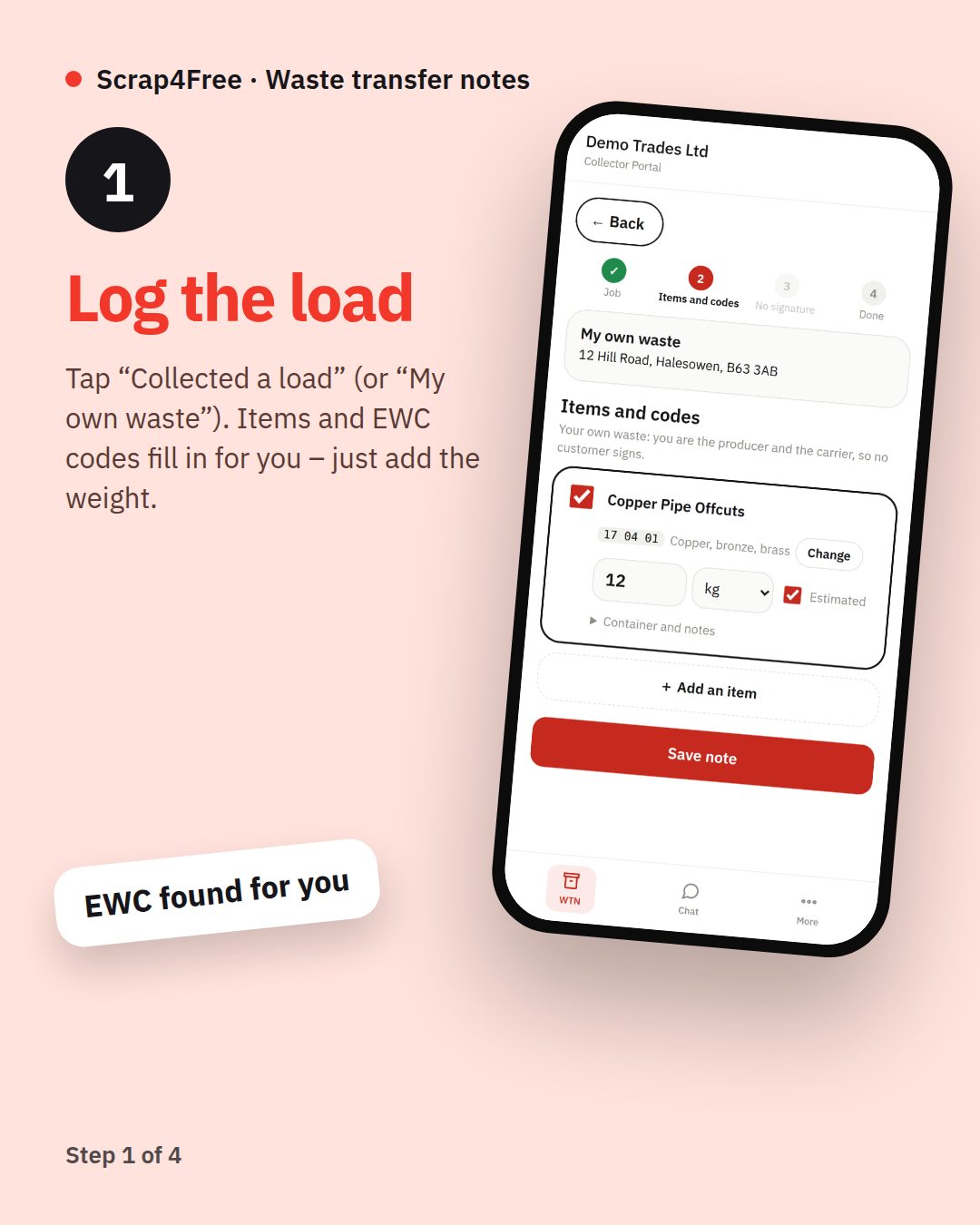
Log the load
Pick cable, metal or fittings and add the weight. Codes fill in for you.
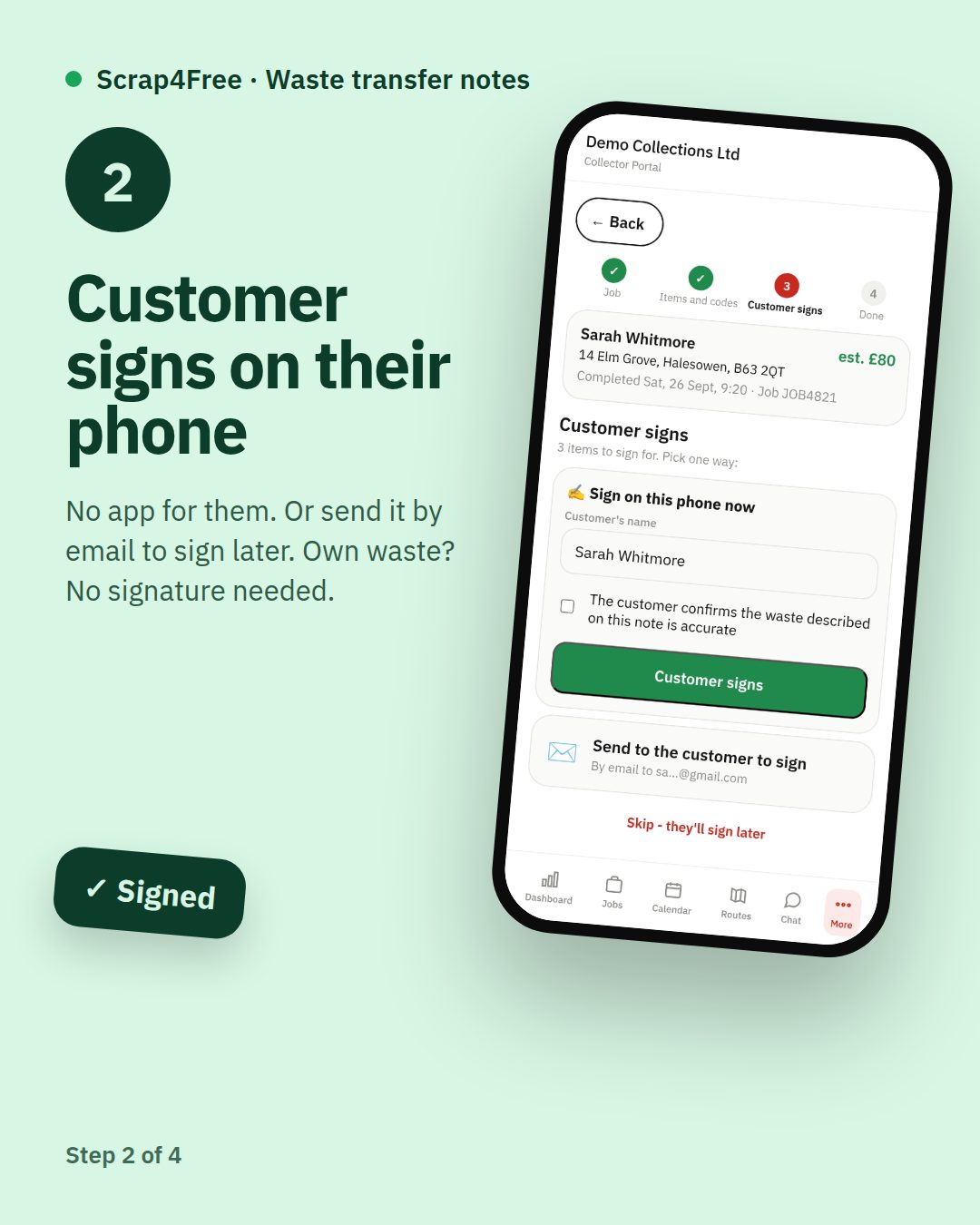
Customer signs
Send a link and they sign on their own phone, even after you’ve left.
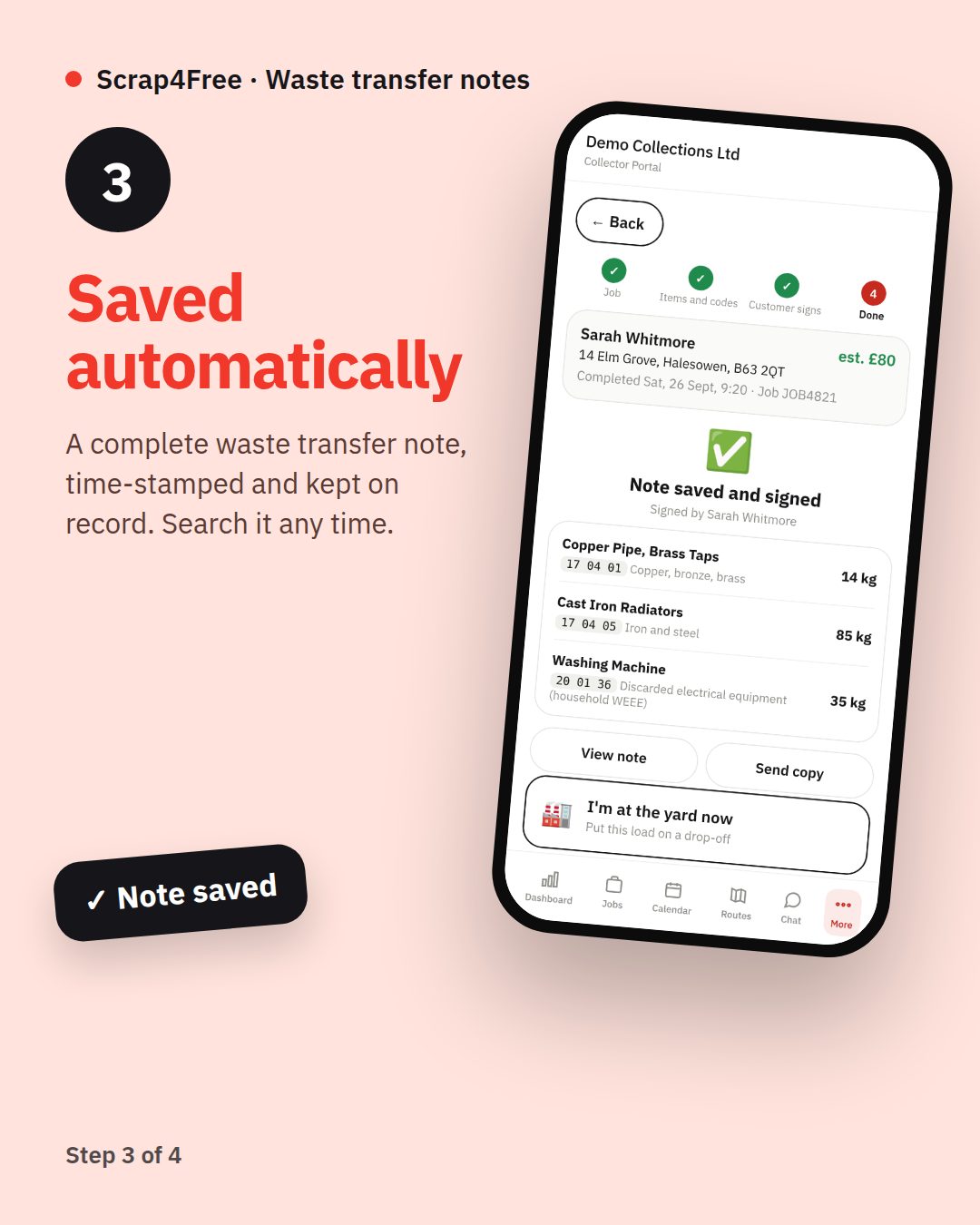
Saved automatically
Every note is time-stamped and easy to search.
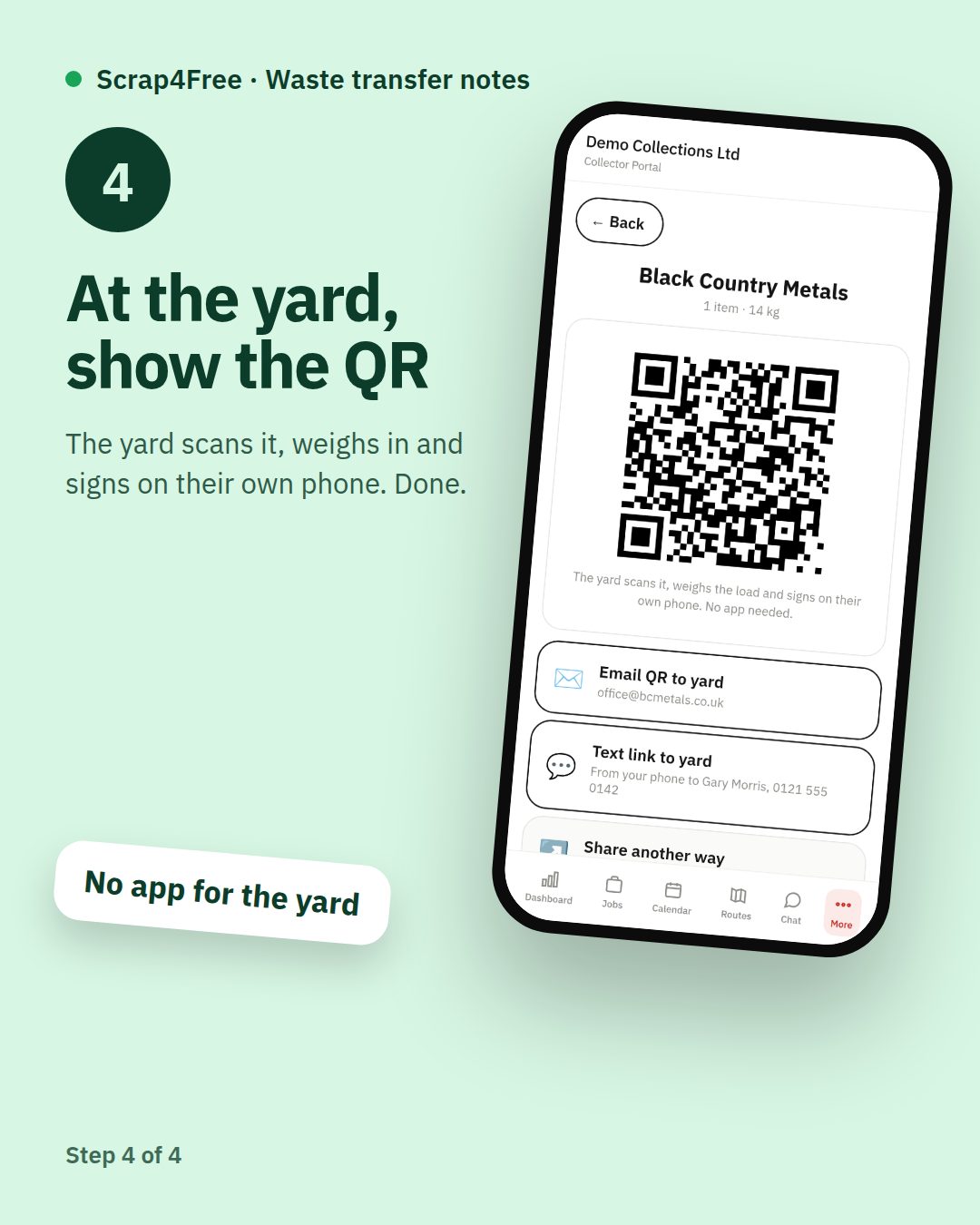
Show the QR
At the yard, they scan it, weigh the load and sign. No paper.
Digital waste tracking is coming for carriers
It’s already law for waste sites, and it’s expected to reach waste carriers from October 2027. Our notes use the same data fields as the government’s service.
Got copper cable to get rid of?
Old wiring and offcuts are valuable scrap. Request a free collection from a local collector.
Frequently asked questions
Do electricians need waste transfer notes?
Yes. If you take waste away from a job, whether you drop it at a yard or a waste site, you need a waste transfer note for each transfer. It’s part of your duty of care for business waste.
What does a waste transfer note need to include?
A description of the waste and how it’s packed, the quantity, the place and date of transfer, the names and addresses of both parties, the receiver’s authorisation details, the European Waste Catalogue (EWC) code, and your business’s SIC code. Both parties sign it.
How long do I keep waste transfer notes?
At least two years. Digital notes on the Scrap4Free app are saved automatically and easy to search, so you can find one in seconds if you’re asked.
What’s the EWC code for old cable?
Cable without hazardous substances is usually 17 04 11. Copper offcuts are often 17 04 01, and mixed metals 17 04 07. The app fills in common codes for you when you pick what you’re carrying.
What about fluorescent tubes?
Fluorescent tubes contain mercury, so they’re hazardous waste. In England, hazardous waste needs a consignment note rather than a standard waste transfer note.
Do electricians need a waste carrier registration?
If you carry waste in your van as part of your work, you’ll usually need to register as a waste carrier. Lower tier is free. Upper tier costs £154 for three years and can be needed for construction and demolition waste, so check which applies to you on GOV.UK.
What’s changing in 2027?
Digital waste tracking is already law for waste sites, and it’s expected to reach waste carriers from October 2027. Scrap4Free’s notes use the same data fields as the government’s service, so your records are ready.
How do I get started?
Download the Scrap4Free app, then register your trade so we can set up your account and explain the pricing for your business.
Not sure which carrier registration you need? Check on GOV.UK.
Switch your waste notes to your phone
Download the app, then register your trade so we can set up your account.
Register Your Trade